Mia Hughes · 14 September 2026
How Domain Transfers Influence Long-Term Search Visibility Patterns in Niche Online Spaces
Domain transfers occur when ownership or registrar control of a web address moves from one provider to another, and this process carries measurable consequences for how search engines evaluate and rank sites over extended periods, particularly in focused online communities such as hobbyist forums, specialized product marketplaces, and regional information hubs.
Mechanics of Domain Transfers and Indexing Signals
During a transfer the authoritative name servers often change, DNS records require propagation across global networks, and temporary disruptions in crawl access can appear while search engine bots adjust to new configurations, yet these short interruptions do not always translate into permanent ranking losses when proper redirects and verification steps follow standard protocols.
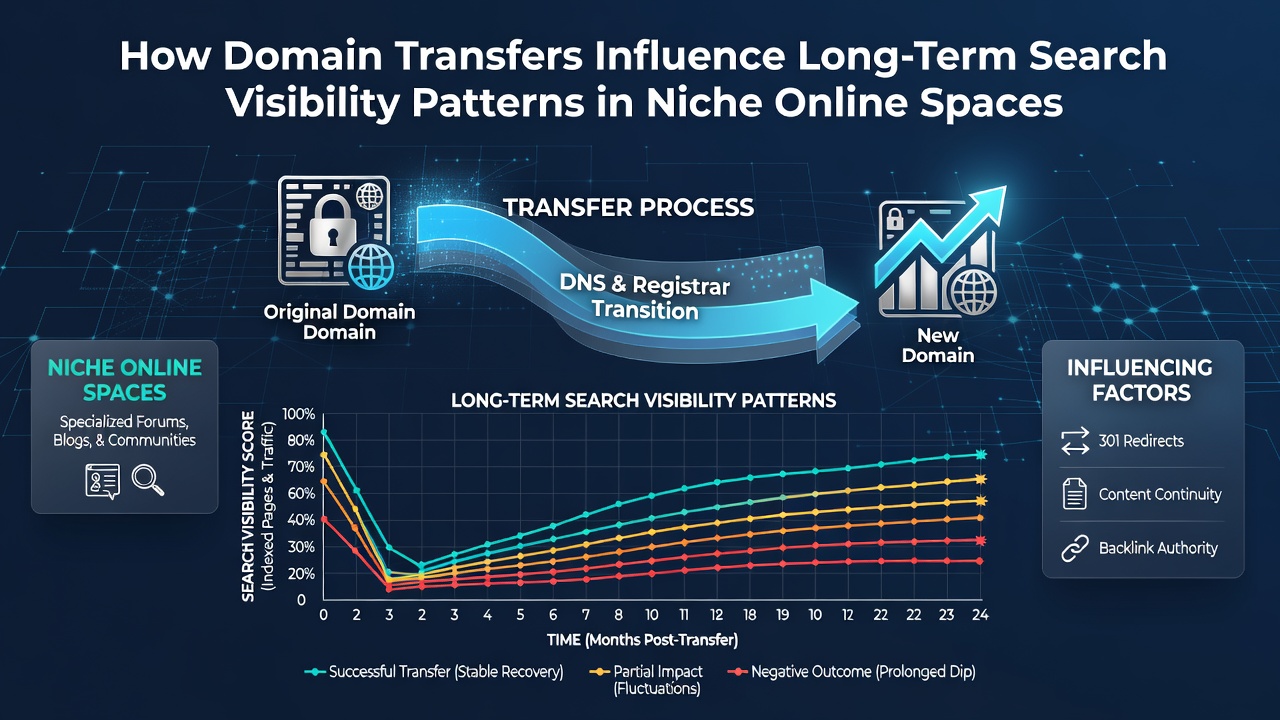
Search engines rely on historical trust signals attached to a domain name, including backlink profiles, content age, and user engagement metrics, so any interruption in these signals during transfer can trigger re-evaluation cycles that last weeks or months depending on crawl frequency in the specific niche.
Observed Visibility Shifts in Specialized Markets
Data from registrar activity logs and search console reports indicate that niche sites experience more pronounced fluctuations than general-interest domains because their audiences and inbound links tend to cluster within smaller, less frequently crawled segments of the web, and this clustering means recovery depends heavily on how quickly the new registrar setup restores consistent server responses.
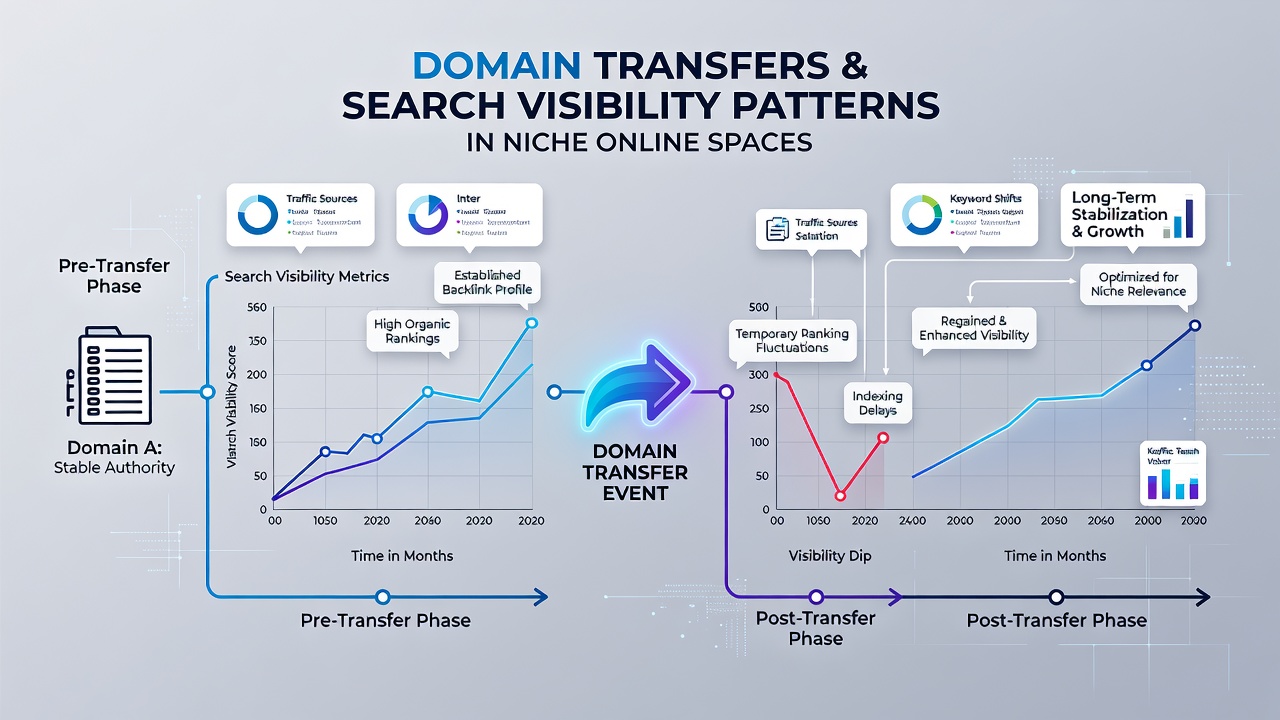
One documented pattern shows visibility drops of 15 to 40 percent in the first 30 days after transfer, followed by gradual stabilization over the subsequent 90 to 180 days when HTTPS certificates, canonical tags, and sitemap submissions remain uninterrupted, according to aggregated reports shared by multiple web hosting providers.
Role of Redirect Implementation and Technical Continuity
Proper 301 redirects preserve link equity across the transfer boundary, and sites that maintain these redirects without gaps demonstrate faster return to pre-transfer visibility levels, whereas missing or misconfigured redirects lead to indexation gaps that compound over time in low-competition but high-specificity keyword spaces.
Technical continuity also involves preserving WHOIS privacy settings and renewal schedules so that accidental expiration does not compound the transfer effects, and registrars that offer bulk transfer tools reduce the window during which bots encounter inconsistent responses.
Patterns Emerging Through 2026
As of September 2026, updates to domain registry security requirements have lengthened some transfer approval windows, and this extended timeline correlates with slightly longer re-indexing periods for sites in tightly defined verticals such as vintage electronics communities and regional outdoor activity directories, according to tracking data compiled by independent analytics firms.
Researchers at several universities have examined these extended windows and found that sites with diversified backlink sources recover more evenly, while those dependent on a narrow set of referring domains show repeated dips during each re-crawl cycle after the transfer completes.
External Factors That Shape Recovery Trajectories
Geographic location of the new nameservers, choice of top-level domain extension, and alignment with regional data protection rules all influence how search engines reassign authority, and transfers crossing international borders sometimes encounter additional latency because of differences in registry response times across jurisdictions.
Industry reports from the Internet Corporation for Assigned Names and Numbers document that standardized transfer policies have reduced unauthorized moves, yet the same policies require verification steps that occasionally delay full DNS propagation for niche operators who manage their own name servers.
Another analysis published by the European Commission on digital infrastructure notes that consistent use of DNSSEC across transfers correlates with fewer temporary de-indexation events, particularly for sites serving audiences in multiple language markets where crawl resources remain limited.
Conclusion
Long-term search visibility after domain transfers follows predictable curves when technical steps align with established search engine guidelines, and niche spaces amplify both the risks and the recovery speeds because of their concentrated link ecosystems and crawl patterns, yet sites that preserve redirect chains and monitoring routines consistently return to stable rankings within predictable timeframes.